
Ototoxic Chemicals and Workplace Exposure in Australia

.

Australia's Workplace Exposure Limits (WEL) list introduces a new advisory notation for airborne contaminants: OTO, identifying substances that are ototoxic. From 1 December 2026, the WEL list replaces the existing Workplace Exposure Standards (WES) as the framework for airborne contaminants in Australian workplaces.

The notation is relevant wherever chemical exposure and occupational noise may occur together. Noise is a well-established cause of occupational hearing loss, but certain chemicals can also damage the auditory system or heighten the ear's susceptibility to noise-related damage. For workplaces that use, handle or generate OTO-notated substances, the change is a prompt to consider chemical and noise exposure as part of the same risk picture, rather than as two separate issues.

Image

Ototoxic chemicals are substances capable of damaging the structures or function of the ear, potentially resulting in hearing loss or other auditory effects. Some can also increase the ear's sensitivity to noise, so that a given noise exposure does more damage than it would on its own.

Safe Work Australia identifies three broad classes of ototoxic substances: solvents, heavy metals and asphyxiants. Substances referenced in Australian workplace guidance include butanol, carbon disulphide, ethyl benzene, n-hexane, styrene, toluene, trichloroethylene, arsenic, lead, manganese, mercury, carbon monoxide and hydrogen cyanide.

Ototoxicity isn't confined to a single industry. Relevant exposures can occur across manufacturing, mining, oil and gas, construction, agriculture, transport and other sectors — particularly wherever chemical processes or products are used in environments where workers are also exposed to elevated noise levels.
monitoring ototoxic chemicals in the workplace

The November 2025 WEL list for airborne contaminants introduced a range of changes to Australia's exposure framework, including revised limits, additional contaminants and changes to advisory notations. Among them, the new OTO notation.

Safe Work Australia's definition is specific: exposure to an airborne contaminant carrying the OTO notation can increase the risk of hearing loss, especially where a worker is also exposed to noise at the same time. The notation is advisory rather than a separate exposure limit. This flags an additional health consideration attached to the contaminant, rather than changing the TWA, STEL or peak limitation that applies to it.

Advisory notations don't capture every hazard associated with a substance. Safety Data Sheets (SDS) and the Hazardous Chemicals Information System (HCIS) remain important sources for a fuller picture of a substance's hazard classification.

The WEL list applies the OTO notation to specific airborne contaminants. As with other advisory notations, OTO is applied to the individual substances identified within the WEL list itself; the absence of the notation from a given entry shouldn't be read as a general statement about a chemical's hearing-related properties.

Workplaces should check the current WEL list against the specific airborne contaminants they use, handle or generate, alongside the relevant SDS and other authoritative hazard information.

Safe Work Australia notes that exposure to OTO-notated substances can occur through skin absorption, inhalation or ingestion. For airborne contaminants, inhalation is the primary pathway and the focus of the WEL framework, but exposure via skin absorption is also relevant for some substances - the WEL list applies a separate Sk notation where this may be significant.

That overlap is a useful reminder that air monitoring sits within a broader exposure picture, rather than standing in for it.

Air quality monitoring considerations for OTO-notated substances

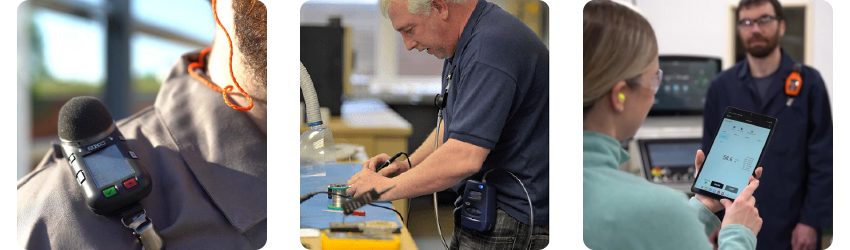
Air monitoring provides objective data on airborne chemical concentrations and can support a range of purposes such as characterising exposure, checking the effectiveness of existing controls, investigating specific tasks or processes, or comparing measured concentrations against the applicable WEL.

The WEL framework recognises several types of exposure limits, including:

  • 8-hour Time Weighted Average (TWA)
  • Short Term Exposure Limit (STEL)
  • Peak limitation

Particulate contaminants are generally expressed in milligrams per cubic metre of air, while gases and vapours are generally expressed in parts per million (ppm). There's no single instrument or method that suits every OTO-notated substance. The appropriate monitoring equipment depends on the contaminant, the applicable exposure limit, the nature of the work and the specific question the monitoring program needs to answer.

Considering chemical and noise exposure monitoring together

The OTO notation gives workplaces a reason to look beyond individual hazards and consider combined exposures. A worker handling an OTO-notated chemical in an area with machinery, ventilation systems, compressed air or vehicle noise may face a hearing-related risk that isn't fully captured by looking at chemical exposure alone.

Safe Work Australia's Model Code of Practice: Managing noise and preventing hearing loss at work addresses ototoxic substances alongside noise and sets out that PCBUs must eliminate or minimise the associated risk so far as is reasonably practicable, applying the hierarchy of controls.

Preparing for the WEL transition

The OTO notation is a meaningful addition to Australia's exposure framework because it draws specific attention to the link between chemical exposure and hearing loss. For workplaces using or generating OTO-notated substances, the relevant question extends beyond whether a chemical has an exposure limit - it includes the route and duration of exposure, existing controls, and whether workers are simultaneously exposed to noise.

Because the OTO notation recognises the intersection between airborne contaminant exposure and risk of hearing damage, where an ototoxic contaminant is present, both air monitoring and noise monitoring are likely to be necessary to gain a full picture of the risk.

Need workplace air quality and noise monitoring equipment?

Air-Met Scientific supplies workplace air monitoring equipment for a range of airborne contaminants and occupational hygiene applications.

If you are reviewing your workplace monitoring program in preparation for the WEL framework, our team can help you identify monitoring equipment suited to your application and the contaminant you need to measure.

Get in touch with our team today to find out more about how we can assist you with preparing for the WES to WEL transition.

Page

Need a hand preparing for the transition to WEL? Contact your local Air-Met Scientific today.

Fields with * are required.

Share with friends

Date and Time

Wed. 23 Sep 2026

Add to Calendar

Location

Australia

Ototoxic Chemicals and Workplace Exposure in Australia